Printable Mindful Dating Checklist for Red Flags & Boundaries

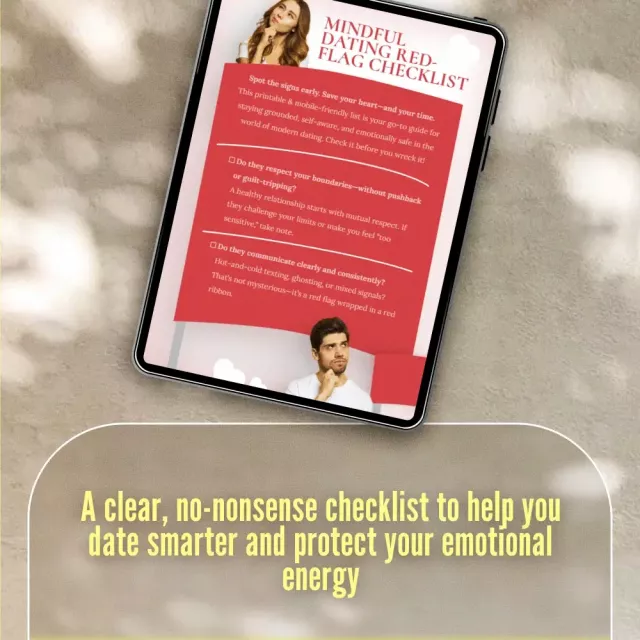
Mindful Dating Red-Flag Checklist: A Printable Guide for Emotional Safety and Clear Boundaries
Dating can feel exciting and confusing at the same time—especially when early chemistry makes it harder to notice warning signs. A mindful red-flag checklist helps slow things down, track patterns, and protect emotional safety without jumping to conclusions. Used well, it supports clear boundaries, flags concerning behavior early, and helps choose next steps with more confidence.
What “mindful dating” looks like in real life
Mindful dating isn’t about interrogating every detail; it’s about staying present and grounded while you gather real information. It prioritizes what’s observable over what’s promised, and it helps you keep your life intact while you explore connection.
- Pay attention to behavior over promises, especially when words and actions don’t match.
- Check in with the body: tension, dread, confusion, or insomnia can be useful signals to pause and look closer.
- Move at a pace that allows verification (time, consistency, meeting in varied settings).
- Stay curious without self-abandoning: ask direct questions and take the answers seriously.
- Keep support systems active (friends, routines, therapy) rather than disappearing into the relationship.
How to use a red-flag checklist without overthinking
A checklist is most helpful when it’s treated like a log, not a verdict. A single awkward moment can be normal; a repeating pattern that intensifies is what changes the risk level.
- Treat each item as a “data point,” not a final diagnosis; patterns and escalation matter more than one incident.
- Write down examples (what happened, when, how it was addressed) to avoid rewriting history later.
- Notice repair attempts: accountability, changed behavior, and respect for boundaries are key indicators.
- Use simple scoring: “one-time,” “repeating,” or “escalating” to guide decisions.
- Revisit at key moments: after dates 1–3, after exclusivity talks, and after conflict.
| Moment | What to observe | What to write down |
|---|---|---|
| After the first date | Respect for time, consent, and basic courtesy | Any pressure, boundary tests, or dismissive comments |
| After early texting/calls | Consistency and tone (warmth vs. control) | Love-bombing signs, guilt trips, rapid intimacy demands |
| After the first disagreement | Repair skills and emotional regulation | Blame-shifting, stonewalling, threats, or genuine accountability |
| After meeting friends/family (when relevant) | Integration vs. secrecy | Isolation attempts, vague stories, conflicting details |
Red flags that affect emotional safety
Emotional safety means being able to say “no,” have needs, and make choices without punishment. The following red flags are less about personality quirks and more about risk—especially when they repeat or escalate.
- Boundary pushing: ignoring “no,” negotiating consent, or making small violations feel normal.
- Manipulation tactics: guilt, obligation, fear, or using your empathy against you.
- Control signals: monitoring, jealousy framed as love, punishing independence, or “testing” loyalty.
- Invalidation: dismissing feelings, mocking, minimizing, or calling you “too sensitive” repeatedly.
- Instability cycles: sudden idealization followed by criticism, withdrawal, or unpredictability.
If you want additional context on warning signs of abuse and coercive control, the National Domestic Violence Hotline offers clear examples. For a broader overview of healthy relationship dynamics, see the American Psychological Association.
Boundary categories to include on a printable checklist
Boundaries are easier to maintain when they’re specific. A printable checklist works best when it reflects the real-life areas where people often feel pressured to “go along” despite discomfort.
- Time boundaries: frequency of dates, texting expectations, personal downtime, work hours.
- Physical boundaries: consent, pacing of intimacy, sleepovers, public displays of affection.
- Emotional boundaries: privacy, conflict style, topics that require trust, handling jealousy.
- Digital boundaries: social media tagging, location sharing, access to devices, posting photos.
- Financial boundaries: splitting costs, gifts, loans, moving-in timelines, shared purchases.
Green flags that balance the picture
A mindful checklist should also make space for what’s going right. Green flags help you avoid a fear-based approach and instead choose partners who show steadiness, respect, and emotional maturity.
- Consistency: plans match follow-through; communication stays steady over time.
- Respect: accepts boundaries without sulking, arguing, or retaliating.
- Accountability: can apologize specifically and change behavior without needing reminders.
- Curiosity: asks questions, listens, and doesn’t rush to define you or the relationship.
- Emotional steadiness: handles disappointment without punishment, threats, or disappearing.
How to choose a printable dating checklist that actually helps (How to Choose)
The best printable checklist is one you’ll actually use—especially when you’re tired, excited, or second-guessing yourself. Look for a design that supports clarity without turning dating into a courtroom.
What to do when you spot a concerning pattern
If you need confidential support or safety resources, RAINN provides options for help, including guidance for people navigating coercion or sexual boundary violations.
FAQ
How early can red flags show up in dating?
Some red flags appear in the first few interactions (pressure, disrespect, inconsistency), while others show up during conflict or when commitment increases. Focus on patterns over single events, especially if behavior escalates when you set limits.
What’s the difference between a red flag and a compatibility issue?
Red flags involve harm, manipulation, control, or boundary violations that create fear or instability. Compatibility issues are neutral differences (like lifestyle or preferences) that can be discussed and negotiated without coercion.
How can boundaries be communicated without sounding harsh?
Use clear, calm statements that describe your limit and what works for you (for example, “I don’t do last-minute plans” or “I’m not ready for physical intimacy yet”). A respectful partner won’t punish you for having boundaries—they’ll adjust and keep treating you well.










Leave a comment