Safe Space Mapping: Build Calm Options for Stressful Days
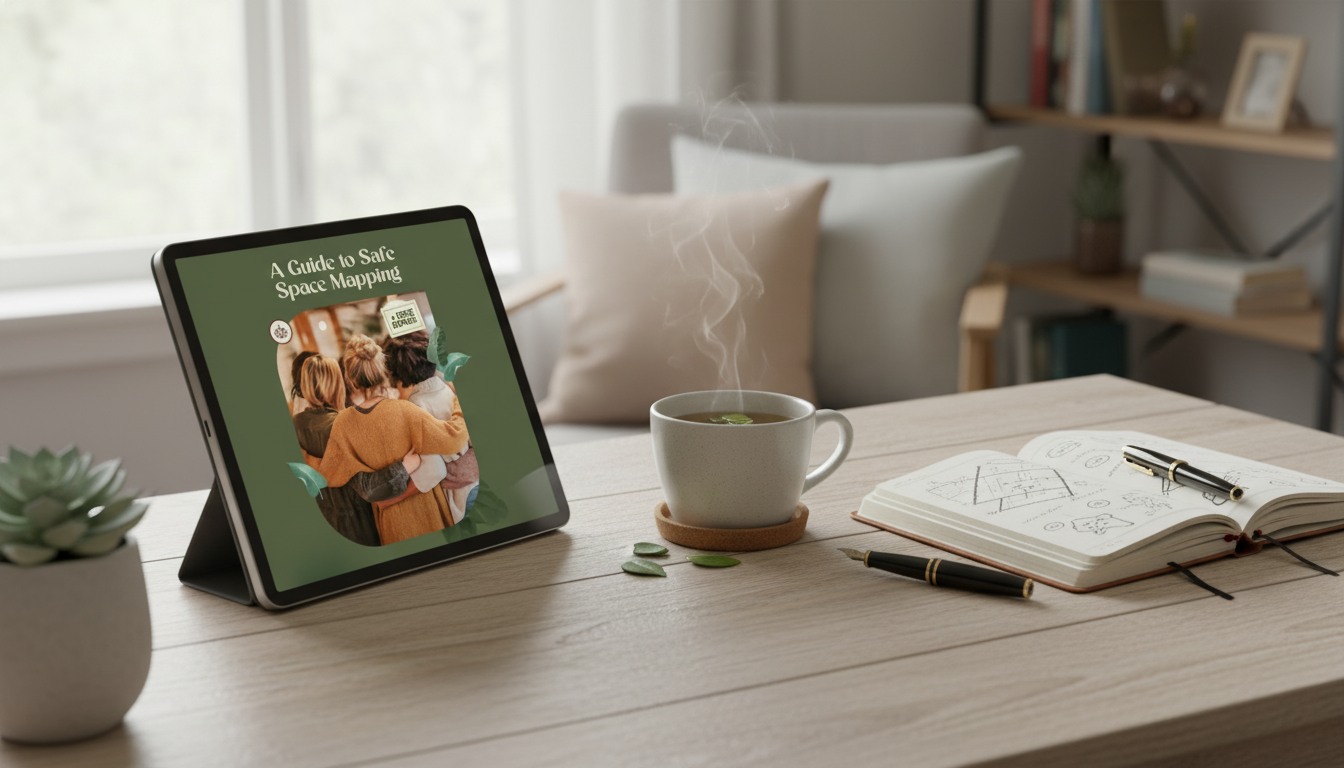
What “safe space” means in everyday life
A safe space is any environment—internal or external—that helps the nervous system settle and supports a sense of control. Some safe spaces are physical, like a specific chair by a window, a quiet library corner, or a familiar walking path. Others are social, like a trusted friend who can listen without judgment. Safe spaces can also be emotional and routine-based (a grounding ritual, a predictable morning sequence) or digital (a moderated online community or a calming playlist).
Safety is rarely one single ingredient. It’s often a layered combination of privacy, predictability, respect, accessibility, and choice. For one person, safety might mean silence and dim lighting; for another, it might mean background noise and gentle companionship. Safe spaces aren’t designed to eliminate all discomfort—they’re about having reliable options that reduce overwhelm and help with regulation when stress spikes.
Different situations call for different kinds of support. A “quick reset” safe space might help in five minutes between meetings. A “deep recovery” safe space might require more time and preparation, like a longer walk, a therapy session, or an evening with fewer demands.
Safe space mapping: what it is and why it helps
Safe space mapping is a simple inventory-and-planning method: list the people, places, routines, and tools that support you; rate how reliably they help; then decide what to strengthen next. It’s especially useful because it separates “feels good sometimes” from “works when I’m actually stressed.”
Mapping also supports boundary-setting by clarifying the conditions you need for safety—time limits, sensory preferences, topics to avoid, and communication norms. When you already know what helps, it’s easier to ask for it clearly and to choose environments that match your capacity.
Another benefit is reducing decision fatigue. Stress narrows attention, and choosing what to do can feel impossible in the moment. A map turns “What now?” into “Pick one of these three.” Over time, safe space mapping becomes a gentle resilience framework: adding one small support at a time is often more sustainable than trying to redesign an entire life overnight. For a deeper background on how safety, trust, and empowerment matter in supportive environments, see SAMHSA’s Trauma-Informed Care (TIP 57) and the American Psychological Association’s overview of trauma.
Common safe space categories to map
| Category | Examples | What to note |
|---|---|---|
| Physical places | Bedroom corner, library, quiet café, nature trail | Noise level, privacy, cost, travel time, hours |
| People and communities | Friend, mentor, peer group, support line | Availability, trust, confidentiality, communication style |
| Activities and routines | Breathing practice, journaling, stretching, cooking | Time required, materials, how quickly it helps |
| Sensory supports | Headphones, weighted blanket, dim lighting | Portability, triggers avoided, comfort level |
| Digital spaces | Moderated forum, playlist, meditation app | Content quality, notifications, privacy settings |
How to create a personal safe space map (step by step)
1) Start with three lists
Make three quick lists: (1) places, (2) people, and (3) practices. Include what you already use and what you might try. Keep it judgment-free—if “sitting in the car for five minutes” helps, it belongs on the map.
2) Add context so the map becomes usable
For each item, note when it works best (morning vs. night), what it supports (calm, focus, connection), and prerequisites (quiet, solitude, a specific playlist, low lighting, comfortable clothing). This turns a vague idea into a repeatable plan.
3) Rate reliability under stress
Use a simple 1–5 rating for how well each option works when stress is elevated. A “5” is something that helps even on hard days. A “2” might be pleasant but unreliable when you’re overwhelmed.
4) Identify barriers early
List what gets in the way: transportation, cost, scheduling, social energy, sensory overload, privacy concerns, or accessibility. Barriers aren’t failures—they’re design constraints. Naming them helps you build alternatives.
5) Balance fast-acting and restorative supports
Choose two fast supports (5–10 minutes) and two restorative supports (30–90 minutes). That balance matters: quick options can prevent escalation, while restorative options help refill the tank.
6) Write a short activation plan
Add a few personal signals that it’s time to use the map: racing thoughts, irritability, shutdown, doom-scrolling, or body tension. Then write the first action (for example: “Step outside and take 10 slow breaths” or “Text Jamie: ‘Can you listen for 10 minutes?’”).
Using your map in real situations
Make the map easy to follow by creating a tiered response:
Creating safer spaces for others (home, work, and community)
How to choose a safe space mapping approach that fits
Protect confidentiality. Store sensitive information securely, and avoid writing details that could create risk if someone else saw the map. Finally, plan maintenance: a quick monthly review is usually enough to update ratings, add new supports, and remove options that no longer feel safe or effective. For broader mental health resources, the World Health Organization’s mental health overview is a helpful starting point.
Common pitfalls and gentle fixes
FAQ
What is a safe space map?
A safe space map is a personal or group tool that lists supportive places, people, and practices, along with notes on reliability, barriers, and how to use them. It often includes simple ratings and an activation plan for stressful moments.
How often should a safe space map be updated?
A light check-in once a month works for many people, and it’s also useful to update after major life changes. Refresh reliability ratings, add or remove supports, and confirm any contact details.
Can digital spaces count as safe spaces?
Yes—digital spaces can be safe if they’re moderated, privacy-aware, and genuinely supportive. Notification controls, content curation, and clear boundaries can help keep them calming rather than activating.








Leave a comment