4-Week Puppy Training Plan: Potty, Cues, Social Skills
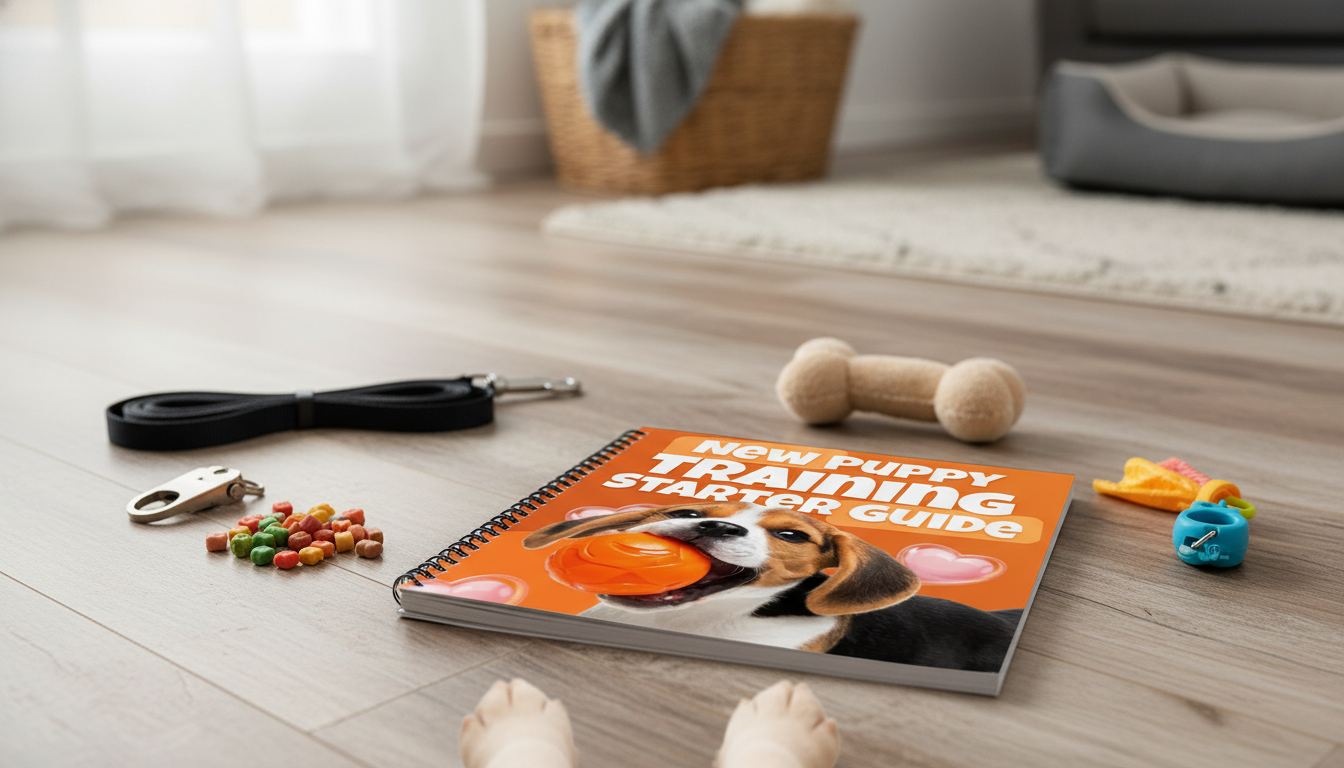
New Puppy Training Starter Guide: A 4-Week Routine for House-Training, Commands, and Socialization
A new puppy learns fastest when days feel predictable: frequent potty trips, tiny training sessions, and the same rewards for the same choices. The 4-week routine below focuses on house-training, crate and calm foundations, early cues, and safe socialization—plus quick fixes for common setbacks like accidents, biting, and barking.
What to Set Up Before Day 1
- Create two zones: a calm rest area (crate or pen) and a supervised play/training area.
- Stock essentials: enzymatic cleaner, treat pouch, soft pea-sized treats, clicker (optional), chew toys of multiple textures, baby gates, and a long line for outdoor potty trips.
- Pick one outdoor potty spot and a single cue word; escort your puppy there every time (no free roaming to “find a place”).
- Decide house rules early (furniture access, sleeping location, feeding schedule) to avoid retraining later.
- Schedule a vet visit and discuss your vaccination timeline so socialization can be done safely (controlled exposures, not risky dog parks).
Daily Rhythm That Prevents Most Problems
Most puppy problems improve when the day follows a repeating cycle: potty → play/train → potty → calm chew → nap. That rhythm prevents accidents, reduces overtired biting, and creates many chances to reward calm behavior.
- Keep training sessions 2–5 minutes, several times daily; stop while your puppy is still eager.
- Young puppies often need 18–20 hours of sleep per day. When sleep is short, biting and barking usually increase.
- Reward calmness on purpose: treat for lying down, quiet chewing, and choosing to disengage.
- Common potty timing: immediately after waking, after eating/drinking, after play, after training, and every 30–60 minutes early on.
Sample day schedule (adjust times to household)
| Time | Activity | Goal | Notes |
|---|---|---|---|
| 7:00 | Potty trip | Start clean | Carry to spot if needed; reward immediately after finishing |
| 7:10 | Breakfast + short training | Food motivation | Use part of meal for sit/name response |
| 7:30 | Potty trip | Prevent accidents | Same spot, same cue |
| 7:45 | Play + chew | Appropriate outlets | Interrupt biting with toy swaps, not rough play |
| 8:15 | Potty trip | Reinforce routine | Keep it boring; reward success |
| 8:30 | Nap (crate/pen) | Build settling skills | Cover crate if helpful; add white noise |
| 10:00 | Potty → socialization exposure | Confidence building | Short, safe exposure + treats |
| 12:00 | Lunch → potty → nap | Consistency | Repeat cycle |
| 17:30 | Dinner → potty → walk/sniff | Mental enrichment | Sniffing lowers arousal; keep it short |
| 20:30 | Calm handling + last potty | Grooming tolerance | Touch paws/ears briefly, reward, then stop |
Week 1: House-Training and Calm Foundations
- House-training core: supervision, confinement, and a tight potty schedule; reward outside success within 1–2 seconds.
- Accidents: interrupt gently (clap/“oops”), escort outside, reward if they finish; clean indoors with an enzymatic cleaner to remove odor cues.
- Crate basics: feed in the crate, toss treats in, close the door briefly while the puppy chews; increase duration slowly.
- Teach “name” and attention: say the name once, then mark and reward eye contact; avoid repeating the name when ignored.
- Start handling: brief touches to collar, paws, ears, mouth area; pair each touch with a treat to reduce future grooming/vet stress.
Week 2: Bite Inhibition, Leash Skills, and Settle
- Biting plan: prevent with naps and chews, redirect to toys, and use short time-outs only if the puppy escalates (calm reset, not punishment).
- Teach “leave it” with low-value items first; reward heavily for disengaging and looking back to you.
- Introduce leash: clip on indoors, reward following, then practice 10–30 seconds outdoors; prioritize loose leash over distance.
- Teach “down” and “settle on a mat”: reward calm body language; add duration gradually before delivering treats.
- Socialization goal: many brief positive experiences (sounds, surfaces, hats, umbrellas, car rides) paired with treats—stop before fear appears.
Week 3: Reliable Basics Around Distractions
- Proof “sit,” “down,” and “come” with the 3 Ds: distance, duration, and distraction—change only one at a time.
- Recall (“come”): practice indoors first, then a fenced yard or long line; reward with jackpots and release back to play so coming doesn’t end fun.
- Polite greetings: reward four paws on the floor; if jumping happens, remove attention and reset with a cue like “sit.”
- Build independence: short alone-time sessions with a stuffed chew; return while calm to avoid reinforcing whining.
- Continue house-training: extend time between potty trips gradually, but revert to shorter intervals after any accident.
Week 4: Social Skills and Real-Life Manners
How to Choose a Printable Puppy Training eBook or Starter Guide
For deeper reading on safe early exposure, see the American Veterinary Society of Animal Behavior (AVSAB) position statement on puppy socialization. For training fundamentals and timing, the American Kennel Club’s puppy training basics and Humane World for Animals house-training tips provide helpful reference points.
Troubleshooting Common Setbacks
FAQ
How often should a puppy go outside for potty training?
Start with every 30–60 minutes when your puppy is awake, plus immediately after waking, eating/drinking, training, and play. As days of success stack up, extend the interval gradually; after any accident, shorten it again and increase supervision.
When can a puppy start socializing with other dogs?
Begin right away with safe, controlled exposure: known healthy, friendly dogs and well-run puppy classes with clear vaccine policies. Talk with your vet about your puppy’s vaccination schedule and avoid high-risk areas like crowded dog parks until your vet says it’s appropriate.
What are the first commands to teach a new puppy?
Focus on cues that create attention and safety: name response, come, sit, down, leave it, drop it, and a simple “touch” (hand target). Keep sessions short, reward generously, and practice in easy locations before adding distractions.







Leave a comment