Safe Space Mapping vs Safety Plans vs Coping Plans
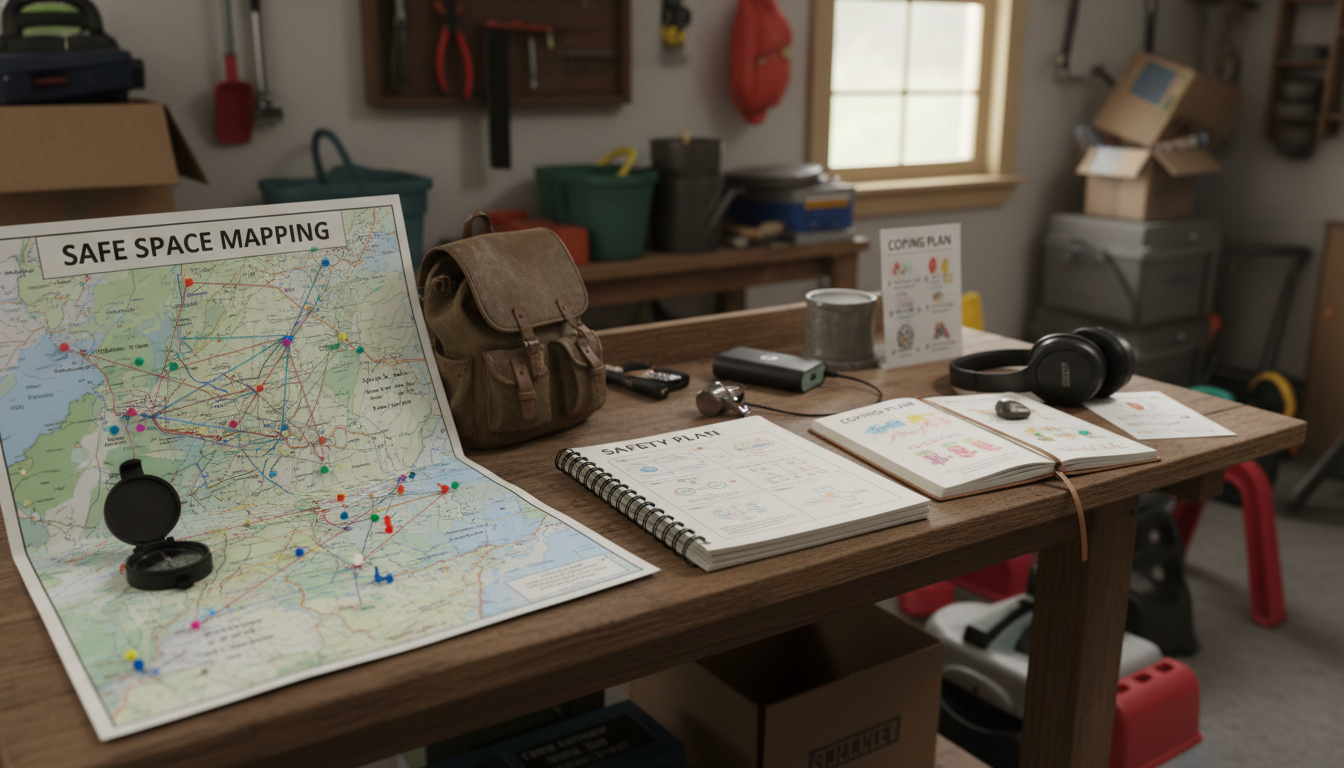
How is safe space mapping different from a safety plan or coping plan?
Safe space mapping, a safety plan, and a coping plan can all support emotional well-being, but they focus on different “layers” of support. Safe space mapping is primarily about identifying and organizing environments and resources that help you feel grounded. A safety plan is more crisis-oriented and structured around steps to reduce immediate risk. A coping plan usually centers on skills and strategies you can use when you’re distressed, whether or not you’re in crisis.
Safe space mapping: place-based and resource-focused
Safe space mapping is the process of noticing what spaces (and space-adjacent supports) help you regulate—such as a quiet room, a specific route for a walk, a corner in a library, a friend’s porch, or even a virtual space that feels calming. It often includes details like what makes a space feel safer (lighting, exits, noise level, who’s present), what to bring (water, headphones), and what to avoid. The goal is to create a personal “map” you can reference to choose supportive environments before things escalate.
Safety plan: crisis steps for immediate protection
A safety plan is typically used when there’s concern about immediate harm. It’s more sequential and actionable: warning signs to watch for, internal coping steps, people to contact, professional resources, and ways to make your environment safer (for example, reducing access to means of self-harm). It’s designed to be followed during high-risk moments, often created with a clinician or trusted support person.
Coping plan: skill-based tools for managing distress
A coping plan focuses on what you can do anywhere to ride out difficult feelings—breathing exercises, grounding techniques, journaling prompts, movement, distraction strategies, or communication scripts. While it can be used during crises, it’s also helpful for everyday anxiety, overwhelm, or triggers. Unlike safe space mapping, it doesn’t depend on a particular location; unlike a safety plan, it doesn’t necessarily include emergency escalation steps.
For a deeper breakdown and practical examples, visit the main guide: https://vividgoodschamber.shop/how-is-safe-space-mapping-different-from-a-safety-plan-or-coping-plan/.
FAQ
What should be included in a safe space map?
Include a few reliable locations, what makes each feel supportive (sensory details, privacy, access to exits), what you need to bring, and a backup option if your first choice isn’t available.








Leave a comment