Couples Conflict Workbook: Scripts to End Repeat Fights

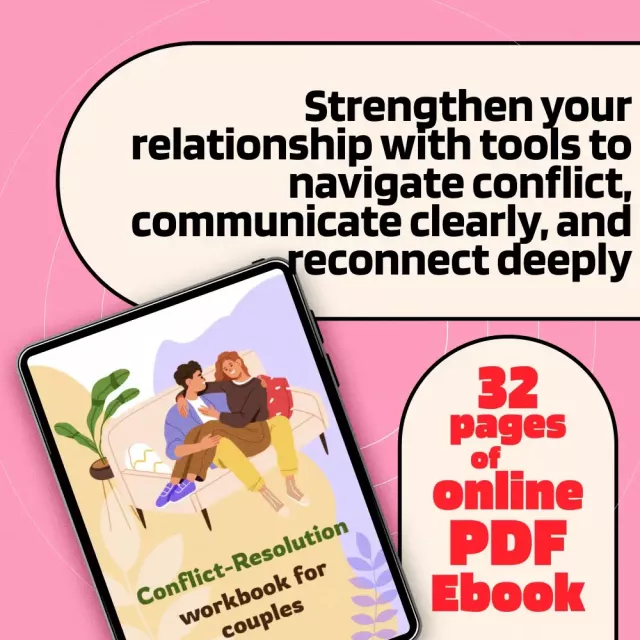
Conflict-Resolution Workbooks for Couples: What They’re Designed to Fix
Recurring conflict often isn’t about one “big” issue—it’s about patterns that get repeated under stress: misunderstanding, defensiveness, missed bids for connection, and repair attempts that never quite land. A conflict-resolution workbook for couples turns those heated moments into structured conversations, helping both partners slow down, listen accurately, name needs, and make workable agreements you can actually follow.
Unlike general relationship advice, a printable relationship communication eBook typically offers prompts, scripts, and worksheets that guide you step by step—especially useful when emotions are high and it’s hard to remember what to do “in the moment.”
What a Conflict-Resolution Workbook Helps With
- Interrupting common argument cycles like pursue/withdraw, blame/defend, or escalation/shutdown.
- Building communication habits such as reflection, validation, curiosity, and clear requests.
- Creating shared language for emotions, needs, boundaries, and repair attempts.
- Reducing “kitchen-sink” fights by keeping discussions focused and time-limited.
- Rebuilding trust after repeated conflict by tracking follow-through and accountability.
Key Skills These Workbooks Train
- Listening to understand: paraphrasing, summarizing, and checking accuracy before responding.
- Emotion regulation: identifying triggers, using time-outs, then returning to finish the conversation.
- Fair fighting rules: staying on one topic, avoiding contempt, and using respectful tone and pacing.
- Problem-solving: defining the issue, brainstorming options, choosing a plan, and reviewing results.
- Repair and reconnection: apologizing effectively, making amends, and restoring warmth after tension.
Many workbooks borrow from widely used relationship research and therapy tools. For example, the Gottman Institute’s “Four Horsemen” model (criticism, contempt, defensiveness, stonewalling) is a practical way to name what’s happening and choose an antidote in real time: Gottman Institute: The Four Horsemen.
A Simple Weekly Plan to Use a Printable Communication eBook
Couples often do best with a predictable rhythm: a few short practices during the week and one longer check-in session. This keeps conflict skills “online” without making your relationship feel like a full-time project.
Week 1: Set conversation agreements
Decide your basics: a time limit, no interruptions, how to call a pause, and how to restart. Write these down as your shared “rules of engagement.”
Week 2: Active listening drills
Practice for 10 minutes, 3–4 times this week. The goal is accurate reflection rather than persuasion: “Here’s what I heard you say… did I get it right?”
Week 3: Map a recent argument
Use a simple chain: trigger → story → feeling → need → request. This reduces blame and increases clarity about what each partner was protecting or longing for.
Week 4: Structured problem-solving
Pick one recurring conflict (money check-ins, division of labor, in-laws, screens at night) and run a workbook problem-solving session. End with a specific plan and a date to review how it went.
Week 5: Add repair rituals
Build in a short post-conflict reconnection: a quick check-in, a calming activity together, and a closing appreciation statement that helps your nervous systems come back to “we’re okay.”
Ongoing: Track follow-through
Keep a brief agreement log and review it weekly. Reliability is one of the fastest ways to reduce reactivity over time.
Exercises That Improve Listening and Reduce Escalation
- Speaker–listener rounds: one partner speaks for 2–3 minutes while the other mirrors and asks one clarifying question.
- Validation practice: name what makes sense about the other person’s reaction, even when you see the situation differently.
- Body-cues check: notice when heart rate, muscle tension, or volume rises; use a pre-agreed time-out script and a return time.
- Needs-to-requests rewrite: convert complaints (“You never help”) into doable requests (“Could you handle dishes tonight?”).
- Repair attempts list: identify each partner’s best “peace signals” (humor, touch, reassurance, space) and when they work.
For additional background on why these skills work, the American Psychological Association summarizes how conflict management improves relationship health and emotional well-being: American Psychological Association: Conflict management.
How to Choose the Right Workbook (Printable vs Digital, Gentle vs Direct)
Choosing a Format That Fits Your Routine
| Option | Best for | Strength | Watch-out |
|---|---|---|---|
| Printable worksheets | Couples who like writing by hand and keeping a binder | Tactile, easy to revisit during disagreements | Needs a dedicated place to store and a calm time to print |
| Fillable digital pages | Couples who prefer phones/tablets or long-distance | Quick to copy, share, and repeat exercises | Typing during conflict can feel transactional if tone is tense |
| Short daily prompts | Low time, high consistency | Builds habits without overwhelm | May not fully resolve complex conflicts without longer sessions |
| Weekly deep-dive sessions | Complex patterns and trust repair | Allows full problem-solving and closure | Requires scheduling and emotion regulation skills |
When a Workbook Is Enough—and When to Add Professional Support
For a clear overview of relationship warning signs and safety guidance, consult: National Domestic Violence Hotline: Relationship warning signs.
Making Changes Stick: Micro-Habits That Rebuild Trust
FAQ
How long does it take for a couples communication workbook to make a difference?
Many couples notice reduced escalation within 2–4 weeks if they practice consistently and keep conversations time-limited. More durable habits—like cleaner repairs and fewer repeat fights—often take 6–8 weeks of weekly review and follow-through.
Can a conflict-resolution workbook help rebuild trust after repeated arguments?
Yes, especially when the workbook includes clear agreements, accountability check-ins, and specific repair steps after conflict. If there’s betrayal trauma or any safety concern, professional support is often needed alongside self-guided work.
What if one partner refuses to do the exercises?
Start with low-friction practices that don’t feel like “homework,” such as soft start-ups, time-outs, and short summaries of what was heard. Invite participation without forcing it, and consider counseling if refusal consistently blocks repair and progress.









Leave a comment