Microwave on a 3-Tier Cart Shelf: Will It Fit?
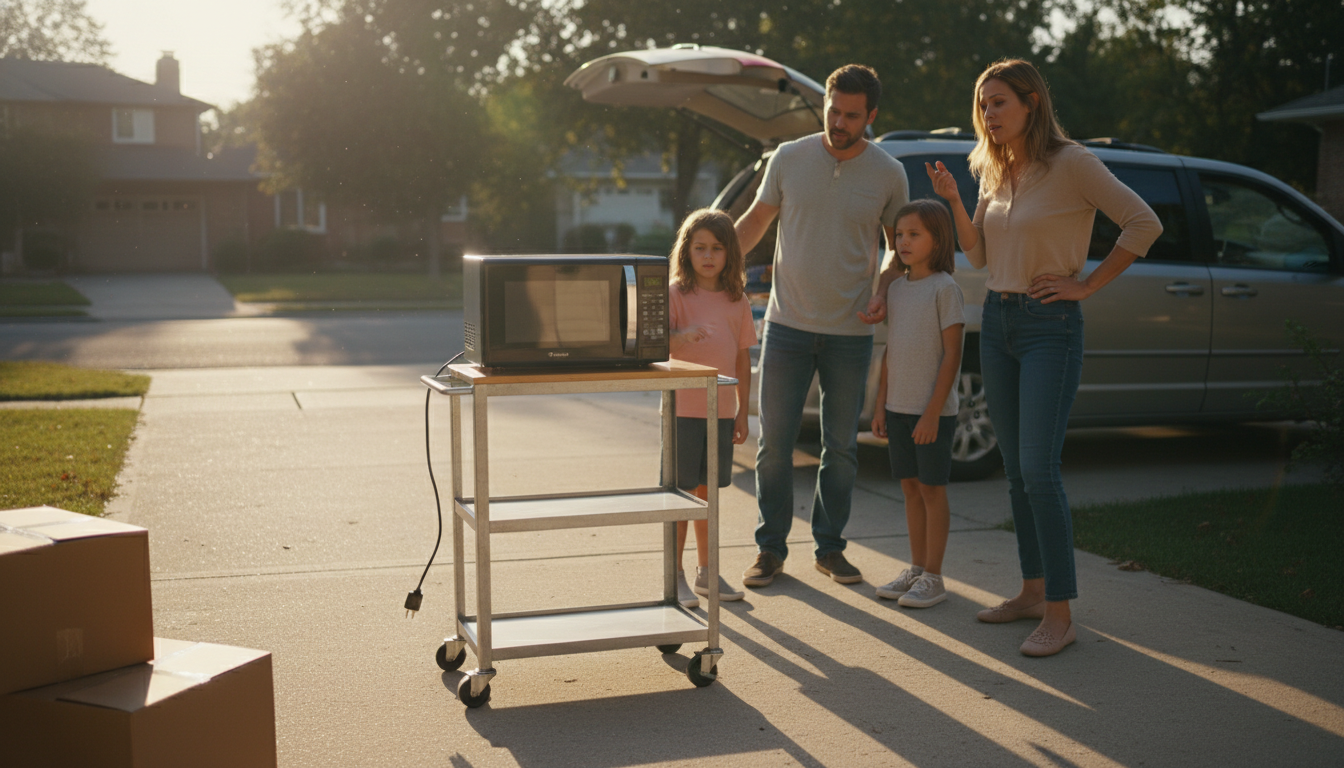
Will a standard countertop microwave fit on the microwave shelf of a 3-tier rolling cart?
Answer
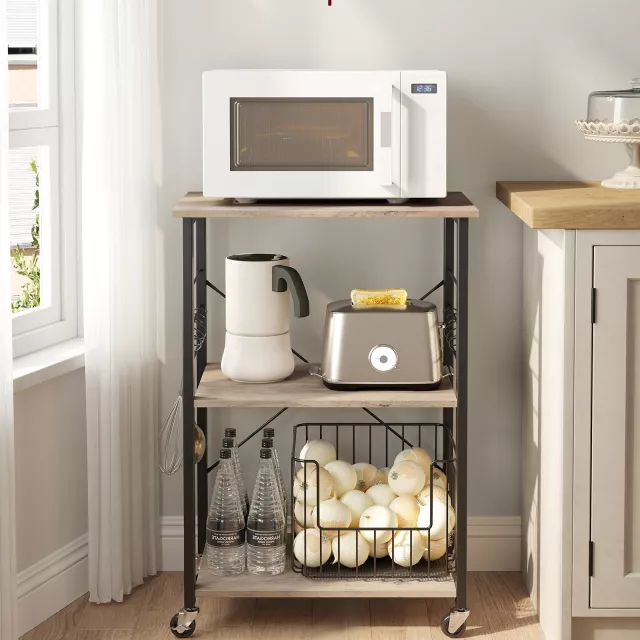
Sometimes—but not always. A “standard” countertop microwave can vary a lot in width, depth, and height, and 3-tier rolling carts with a microwave shelf aren’t built to one universal size. Many carts are designed around compact to mid-size countertop microwaves, while larger 1.1–1.6 cu. ft. models may hang over the edge, block airflow, or sit too close to side rails.
To know if it will fit, compare your microwave’s external dimensions to the cart’s microwave-shelf dimensions (usable width and depth). You’ll also want clearance for the door swing and a little breathing room around the unit for ventilation—especially at the back and sides—so the microwave doesn’t run hot or feel cramped. If your microwave has rear vents, make sure the cart doesn’t push it flush against a wall or solid backing panel.
Weight capacity matters just as much as size. Some rolling carts have sturdy metal frames and thick shelves, while others are lighter-duty. Check the shelf’s weight rating and confirm it exceeds the microwave’s weight (with a buffer). Also consider stability: a heavier microwave placed on an upper shelf can make a cart feel top-heavy if the wheels aren’t locking or the base isn’t wide enough.
Before buying, measure three things: (1) the shelf’s usable footprint (not just the overall cart width), (2) the height between shelves so the microwave can slide in without scraping, and (3) the path for the cord to reach an outlet without pinching. For a deeper sizing checklist and what to look for in shelf design, see the full guide here: 3-tier rolling kitchen cart with microwave shelf.
FAQ
How do I measure a microwave shelf on a rolling cart correctly?
Measure the usable width and depth inside any rails or side frames, then measure the vertical clearance above the shelf. Compare those numbers to your microwave’s external dimensions, and leave extra space for airflow and door clearance.










Leave a comment