Sleep Reset: 7-Day Guided Audio for Better Sleep
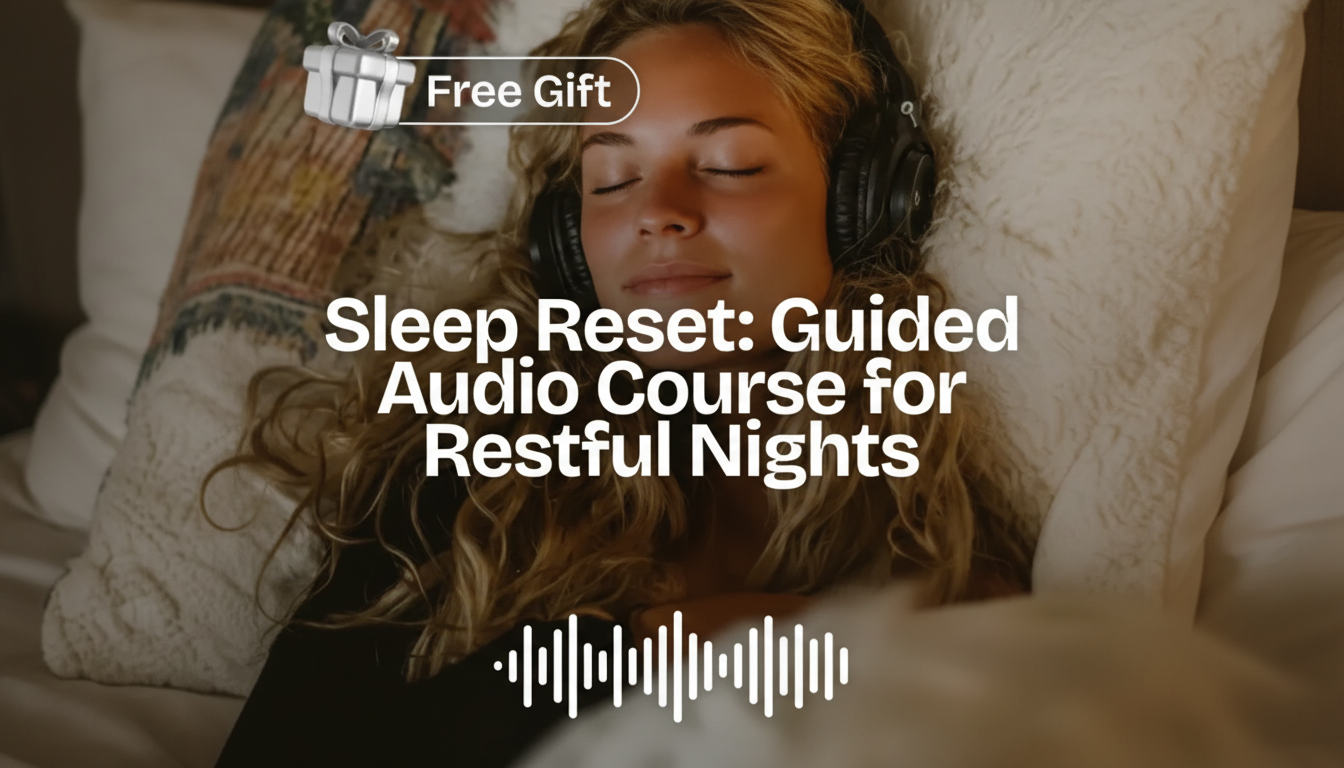
Sleep Reset: Guided Audio Course for Restful Nights
Sleep Reset is a 7-day guided audio program designed to support calmer evenings, easier wind-down, and more consistent rest through sleep meditation and deep relaxation practices. It’s built for people who want a structured nightly routine that helps quiet mental noise, release physical tension, and reduce the spiral that often accompanies insomnia.
What Sleep Reset is
Sleep Reset is a simple, repeatable audio course you can run at bedtime for one week. Each session is designed to help shift your system from “still on” to “ready for rest” with steady guidance you can follow without effort.
- A guided audio course structured over 7 days to build a repeatable bedtime routine
- Uses sleep meditation and relaxation cues to shift from alertness into rest readiness
- Designed to be simple: press play, follow the guidance, and let the session carry the pace
- Fits common sleep challenges such as difficulty falling asleep, nighttime overthinking, and restless body tension
How the 7-day format helps reset nights
A multi-day plan can be more effective than random single tracks because it removes choices when you’re tired and builds a familiar set of cues your brain starts to associate with sleep. Over a week, the routine becomes easier to start and easier to follow, even on nights when you feel wired.
- Day-by-day structure reduces decision fatigue at bedtime by removing “what should be done tonight?”
- Progressive familiarity with the audio routine can make wind-down cues more effective over time
- Encourages consistency, which is often more impactful than searching for a single perfect technique
- Works well as a short, focused reset after travel, stress spikes, schedule changes, or a run of poor sleep
Consistency matters because sleep is heavily influenced by timing, light exposure, and conditioned associations. Pairing a steady nightly audio cue with basic sleep-supportive habits can reinforce your wind-down signal. For general guidance on sleep health and routines, see the National Heart, Lung, and Blood Institute’s healthy sleep resources.
Core techniques commonly used in guided sleep audio
While each guided program has its own style, most effective sleep audio uses a handful of proven relaxation approaches to reduce arousal (the “revved up” feeling) and soften attention away from worry loops.
- Breath pacing: Slow, comfortable breathing cues can help lower physiological activation and interrupt racing thoughts.
- Body scan relaxation: Guided attention through areas like the jaw, shoulders, chest, and hips helps release tension you may not realize you’re holding.
- Visualization or grounding: Simple imagery or sensory prompts give the mind a neutral “track” to follow instead of replaying the day.
- Gentle reframes: Supportive language can reduce frustration about being awake, helping cut down on clock-checking and pressure to sleep.
- Closing routine cues: Consistent prompts (lighting, temperature, posture, and audio start) reinforce the message that the day is done.
Who this course tends to suit best
Guided sleep audio isn’t one-size-fits-all, but certain sleep patterns respond especially well to voice-led relaxation—particularly when your body is tired while your mind stays alert.
- People who lie down tired but become mentally alert once the room is quiet
- Light sleepers who benefit from a steady, predictable audio anchor during the first part of the night
- Anyone wanting a non-caffeinated, non-stimulating evening practice that doesn’t require screens
- Beginners to meditation who prefer a clear voice-led path rather than silent practice
- Those who want insomnia relief support as part of a broader sleep-hygiene routine
If insomnia is frequent, long-lasting, or significantly impacts daytime functioning, it may help to learn about clinical approaches as well. The American Academy of Sleep Medicine’s overview of insomnia is a helpful starting point.
How to use Sleep Reset for better results
Small setup choices can make guided audio feel smoother and more sleep-friendly. The goal is to create a low-friction pathway: fewer decisions, fewer stimuli, and a clear transition into rest.
For older adults or anyone navigating schedule changes, the National Institute on Aging’s sleep tips can be a useful complement to a nightly audio routine.
How to Choose a guided sleep meditation audio course
Quick checklist for selecting the right sleep audio program
| What to check | Why it matters | A good sign |
|---|---|---|
| 7-day (or multi-day) progression | Builds a consistent cue for wind-down | Clear day-by-day plan and simple nightly steps |
| Session duration options | Prevents frustration if the track feels too long/short | Multiple lengths or a track that ends naturally without abruptness |
| Guidance style | Some voices relax; others irritate or feel too directive | Gentle pacing and language that reduces pressure to sleep |
| Sound design | Harsh frequencies or volume swings can wake light sleepers | Even volume, optional background audio, no sudden transitions |
| Ease of night use | Sleepiness and darkness make apps hard to navigate | One-tap play, favorites, and simple replay |
| Compatibility with insomnia care | Severe insomnia may need structured behavioral support | Encourages healthy routines and avoids rigid promises |
Realistic expectations and sleep-safety notes
FAQ
Can guided sleep audio help with insomnia?
It can help by reducing arousal, easing racing thoughts, and creating a predictable wind-down routine that supports falling asleep. If insomnia is chronic or severe, structured approaches like CBT-I and medical guidance can be important additions.
What if the session ends and sleep still hasn’t come?
Keep the pressure low: avoid clock-checking, and consider replaying the audio gently if it feels soothing. If you feel frustrated or wide awake, a brief, quiet, non-stimulating activity can help until you feel drowsy again.
Is it better to use headphones or speakers for sleep meditation?
Headphones can improve clarity but may be uncomfortable or shift during sleep, while speakers are often more comfortable but could disturb a partner. Choose the option that feels easiest to tolerate at low volume without adding stimulation.









Leave a comment